
The origins of the “Salt of the Earth” Film Festival date back to 1927, when Mark Iosifovich Tsiporin arrived in Samara and established a correspondent office, marking the beginning of the first newsreel studio in the Volga region — the Samara (later Kuibyshev) Newsreel Studio. In 1941, Kuibyshev became the reserve capital. Along with industrial enterprises, cultural institutions, and foreign embassies, the Central Newsreel Studio was evacuated here from Moscow to the Volga.
The studio became a major center for processing footage filmed by frontline cameramen. From here, newsreels and films about the events of war and peace were sent both to the front lines and to the rear. Kuibyshev cameramen preserved for future generations some of the most important events of the Great Patriotic War: A.F. Kaznacheev covered the battles at Malaya Zemlya; N.P. Kiselev reached Berlin and filmed the signing of the Act of Unconditional Surrender of Nazi Germany; P.M. Oppenheim created documentary films about the Battle of Moscow and the Battle of Stalingrad.
All of this left a distinctive mark on the cultural life of Samara, particularly within the filmmaking community. In the 1990s, when the newsreel studio gradually ceased to exist, filmmakers began searching for new ways to realize their creative potential. Creative unions and associations were established. One of such associations was the Samara Regional Public Foundation “Volga Region Historical & Cultural Fund” founded in 2000 by Mikhail Mikhailovich Serkov, a film director of the Kuibyshev Newsreel Studio and an Honored Worker of Arts of the Russian Federation.
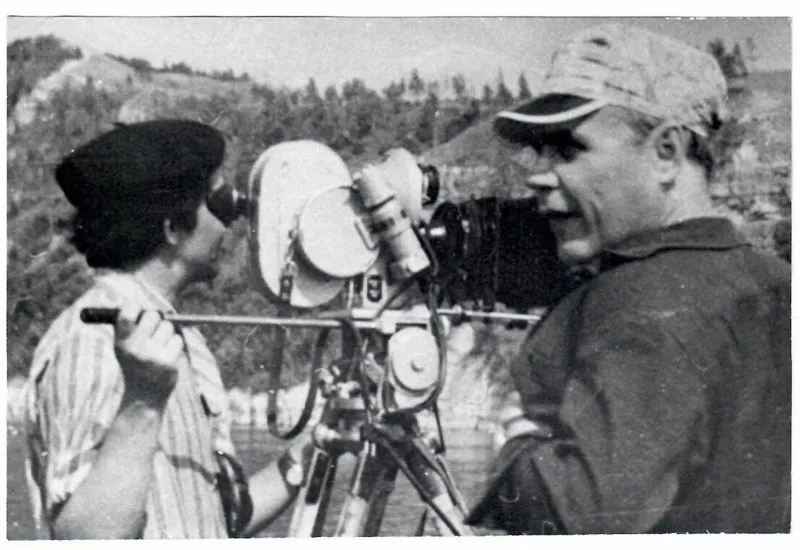
The Fund produced film cycles such as “The Best People of Russia,” “Our Fellow Countrymen: The Golden Fund,” “Portraits of the Past,” and others. All these works are united by one idea: at their center stands a person — a master of their craft, someone striving to improve the world around them, to help those in need, and to raise достойное future generations. Such people are called the “salt of the earth.”
Honorary citizens of the Samara Region supported the initiative to create a film forum that would contribute to the достойное upbringing of younger generations. In 2008, the Fund, with the active participation of the Club of Honorary Citizens of the Samara Region and the support of the Government of the Samara Region, established the Open All-Russian Documentary Film Festival “Salt of the Earth,” which later reached the international level.
The first festival took place in the year marking the 100th anniversary of Russian cinema. The events were held aboard a riverboat traveling along the Volga, following the locations depicted in the first Russian film “Ponízovaya Volnitsa”, created in A.I. Drankov’s studio. Festival participants and guests visited the salt fair in the village of Usolye (Shigonsky District), the ceremonial hall that hosted the Russia–EU Summit in 2007, and the Volga Cliff sanatorium. The Grand Prix of the first festival was awarded to the film “Heaven and Earth” by director Sergey Karandashev.
Over the years, the festival has significantly expanded its geography, bringing together filmmakers from both neighboring and distant countries. A strong circle of friends and like-minded people has formed and continues to grow each year.
For several years, the jury was chaired by Galina Semyonovna Prozhiko (Russia) — Honored Worker of Culture of the Russian Federation, Doctor of Arts, Professor at VGIK, and member of the Union of Cinematographers of Russia.
Currently, the jury is chaired by Nikolai Vasilyevich Volkov (Russia) — cinematographer, film director, laureate of Russian and international film festivals, Head of the Cinematography Department at the Saint Petersburg State Institute of Film and Television, and Honored Worker of Arts of the Russian Federation.
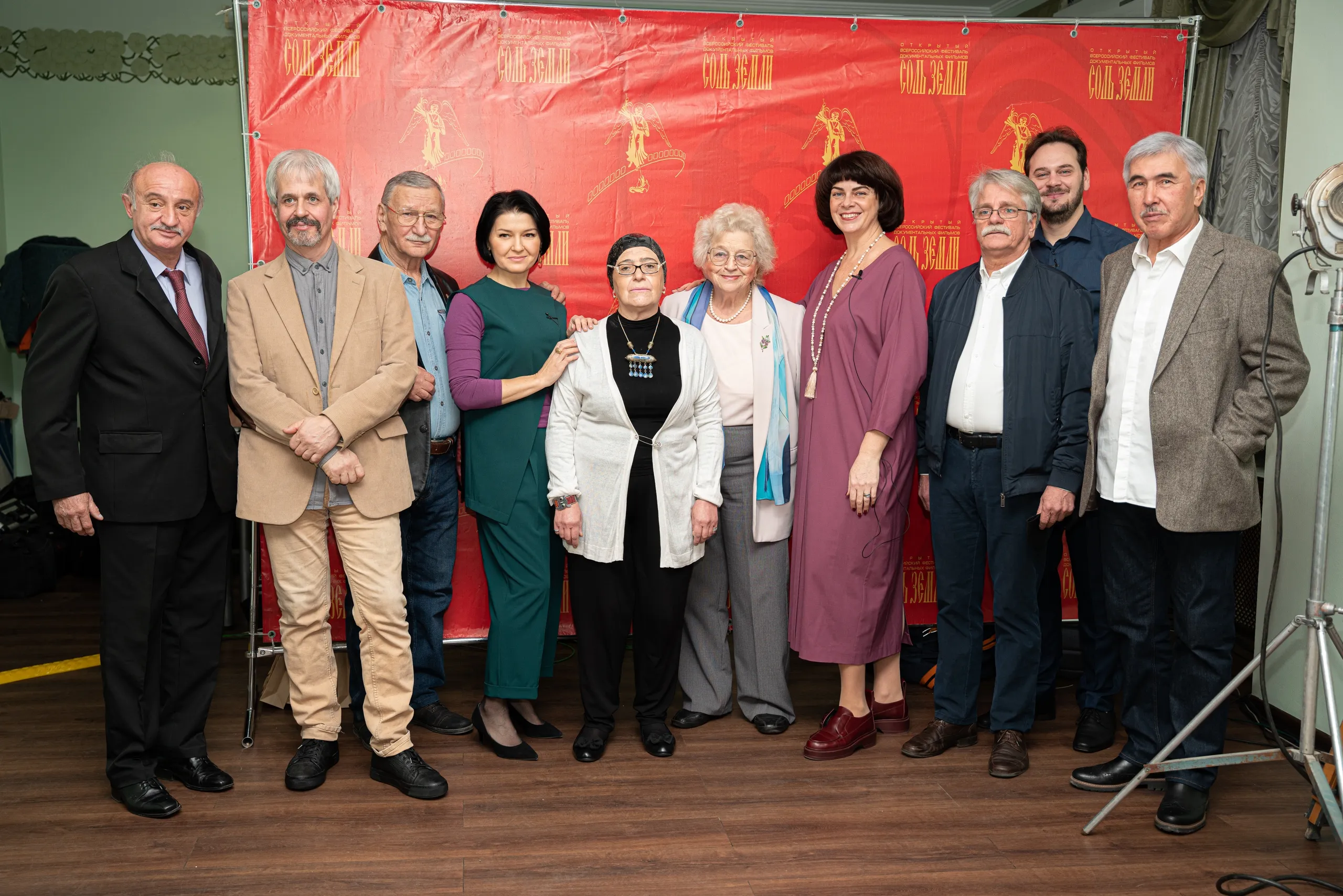
Over the years, the festival jury has included many distinguished filmmakers from Russia and other countries, including:
Armen Nikolaevich Medvedev (Russia) — Honored Worker of Arts of the Russian Federation.
Sergey Galievich Katier (Belarus) — producer, screenwriter, director, TV presenter, Associate Professor at the Belarusian State Academy of Arts, member of the Union of Cinematographers of Belarus.
Vladimir Evaldovich Eisner (Russia) — film director, laureate of Russian and international film festivals, director of Asia-Film Studio (Novosibirsk).
Alexander Vladimirovich Tyapov (Russia) — documentary film director, theatre director and actor, participant of Russian and international film festivals and forums.
Srdjan Ilic (Serbia) — producer, director, Chairman of the Union of Cinematographers and Television Workers of Vojvodina.
Lyudmila Petrovna Korshik (Russia) — documentary filmmaker, laureate of Russian and international film festivals, artistic director of the independent creative association “Kinokhronika.”
Boris Borisovich Travkin (Russia) — documentary filmmaker, laureate of Russian and international film festivals, artistic director of the independent creative association “Kinokhronika.”
Alexander Leonidovich Myasnikov (Russia) — laureate of the State Prize of the Government of the Russian Federation in Culture, journalist, writer, historian, author and host of television projects, co-creator of the multimedia historical park “Russia – My History.”
Algis Arlauskas (Spain) — actor, director, producer, screenwriter, laureate of Russian and international film festivals, member of the Union of Cinematographers of Russia.
Galina Adamovich (Belarus) — documentary filmmaker, member of the Belarusian Union of Cinematographers, laureate of international festivals, recipient of the Special Prize of the President of the Republic of Belarus “For Spiritual Revival.”
Arsen Arakelyan (Armenia) — film director, producer, screenwriter, Candidate of Art Studies, Associate Professor, member of the Union of Cinematographers of Armenia.
Aibek Dairbekov (Kyrgyzstan) — film director, screenwriter, producer, founder of the children’s film foundation “Karek,” founder of the children’s film festival “Karek,” Chairman of the Union of Cinematographers of Kyrgyzstan (2019–2022).
Dali Okropiridze (Georgia) — member of the presidium of the “Golden Knight” International Film Forum, film scholar.
Svetan Strahinic (Serbia) — producer, documentary screenwriter, member of the Guild of Film Artists of Serbia, laureate of international awards.
Ekaterina Zenovich (Russia) — screenwriter and editor of documentary films, creative producer of TV and documentary projects.
Tynay Ibragimov (Kyrgyzstan) — People’s Artist of Kyrgyzstan, film director, cinematographer, screenwriter, member of international film organizations.
Vahagn Ter-Akopyan (Armenia) — cinematographer, Chairman of the Guild of Cinematographers of Armenia, laureate of international festivals.
Filipp Vladimirovich Kudryashov (Russia) — President of the Guild of Producers and Film Process Organizers of the Union of Cinematographers of Russia.

The symbol of the festival is the Archangel Michael, patron of those who fight evil both around them and within themselves. The winners receive an original statuette of the Archangel standing on a globe encircled by a film strip, striking a serpent with a spear. The statuette is made of bronze using artistic casting techniques. A silver-plated statuette is awarded for Best Cinematography, and the Grand Prix is a gold-plated statuette.
The festival’s prize fund includes the Governor of the Samara Region Award “For the Best Film Promoting the Establishment of Russian Statehood,” as well as the Award of the Head of the Samara City District.
Over 19 years, more than 10,000 documentary films have been submitted to the festival. Each year, 45–60 films are selected for the competition program. The festival also includes non-competitive screenings dedicated to important events in Russia, as well as master classes and creative meetings.
Festival guests and audiences in Samara discover the diverse life of Russia and the world through these screenings. These interactions strengthen cultural ties and foster new creative collaborations between filmmakers from different regions and countries. Master classes and meetings contribute to the professional growth of participants.
In addition to its main venue — the Center of Russian Cinematography, located in one of the oldest cinemas in Samara — the festival has established a tradition of holding events in museums, libraries, and universities across the Samara Region. Screenings are attended by students and educators, giving audiences the opportunity not only to watch films but also to engage in dialogue with filmmakers.
These meetings enrich both creators and viewers who share a deep interest in documentary cinema.
Festival motto: “Let your light shine before others…”